The true charm of booking a campsite is that with a bit of time and effort, you can snag a premium spot for the same price as a basic one. This is especially true for national and state parks, where the best spots don’t usually cost extra. Thanks to your tax dollars, these beautiful locations are available for everyone to enjoy.
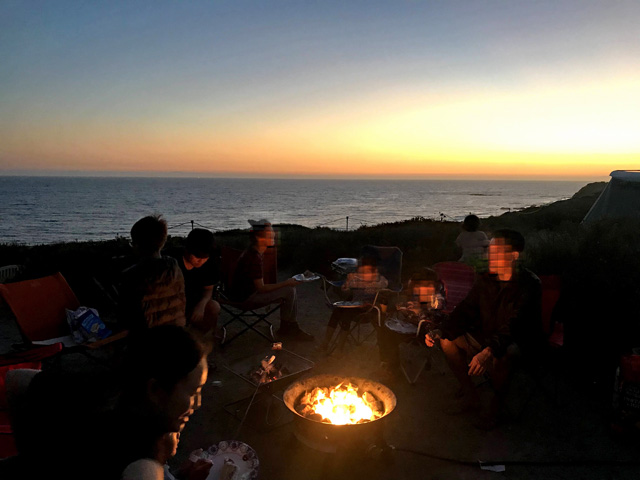
When it comes to reservations, planning ahead is 90% of the battle. In general, reservations open six months in advance.
- During Christmas or New Year’s, you should be booking for the start of summer break.
- By February, your late summer trips should already be booked.
NOTE: If you wait until the weather gets nice to start looking, you’ve already missed the boat!
To reserve a campground that everyone wants to visit, you need to mark your calendar, set alarms. However, the exact date and time you need to refresh the page varies by reservation site, so I’ll explain using examples based on where I live.
1. National Parks
Reservations are handled via recreation.gov. While the site is shared, every park has different rules.
How to Find the “Booking Window”
Go to the Seasons & Fees tab on any campground page. The first thing you’ll see is Booking Windows, which tells you the reservation schedule.
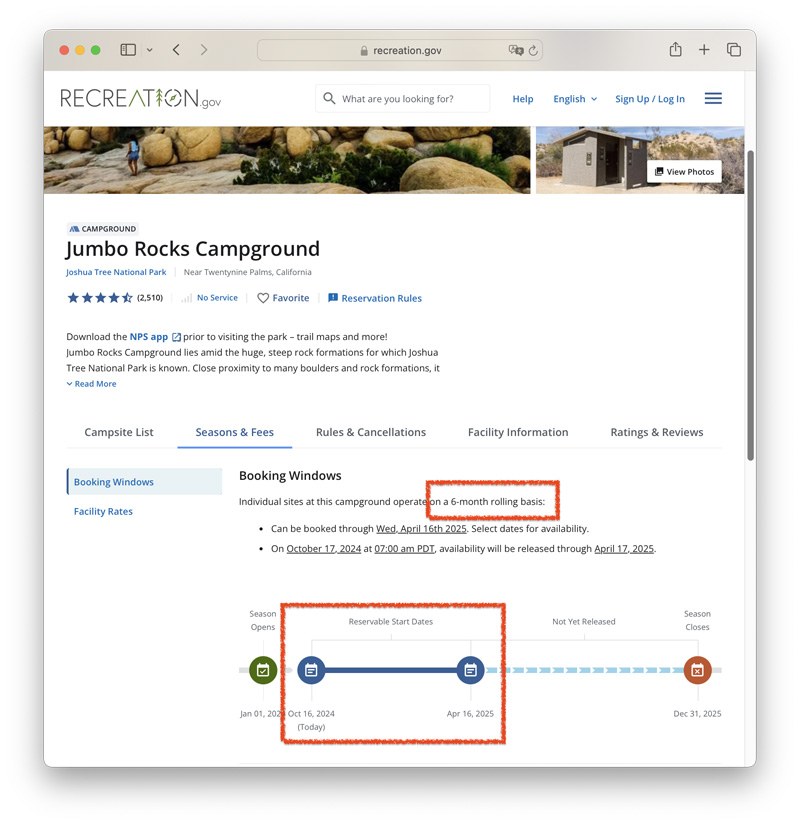
The image below shows Joshua Tree’s Jumbo Rocks Campground, where reservations open one day at a time, six months in advance.
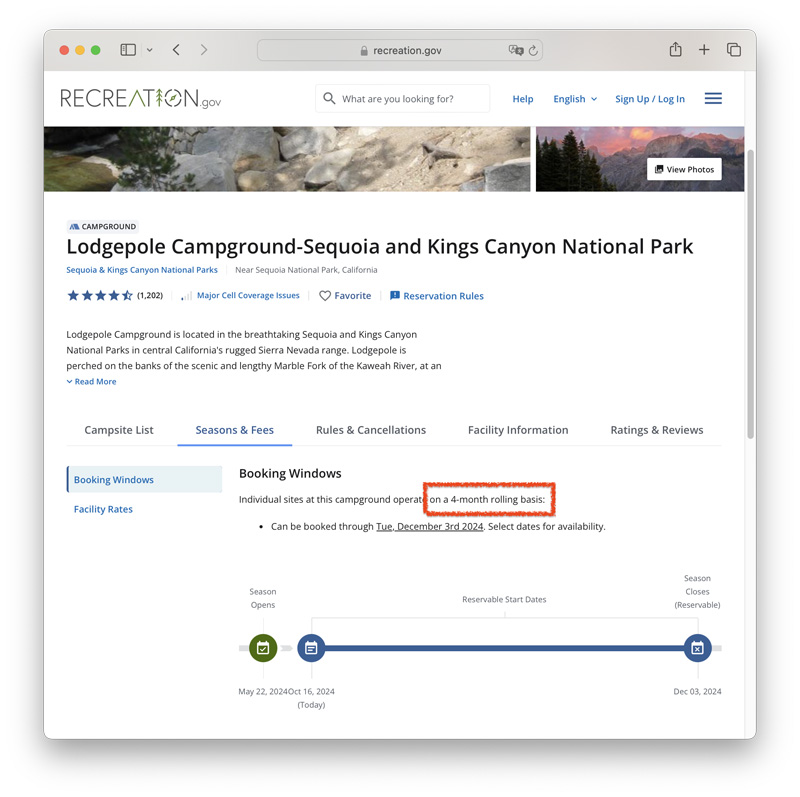
Sequoia’s Lodgepole Campground is unique in that reservations open 4 months in advance.
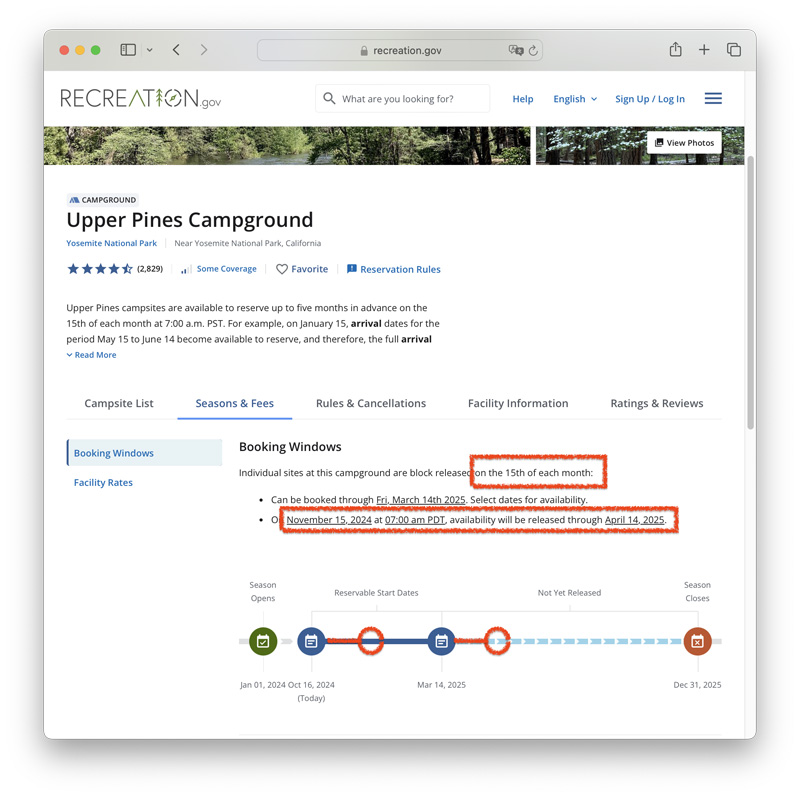
Yosemite’s Upper Pines Campground releases an entire month of availability all at once on the 15th of each month.
So, if you want to check in on July 19, you’d set a 7 a.m. alarm on the following dates:
- Joshua Tree: January 19 (6 months prior)
- Sequoia: March 19 (4 months prior)
- Yosemite: March 15 (15th of the month, 4 months prior)
There’s Always Someone One Step Ahead
While reservations technically open on these dates, reality isn’t that simple. Most campsites are already taken because people who booked earlier have reserved multiple consecutive nights, which blocks out your desired check-in date. For example, if someone booked a 7-night stay starting three days earlier, they’ve already occupied the date you want. This is a classic case of “there’s always someone one step ahead.”
If you prepare naively, you’ll be the one getting outplayed.
The smart ones are ruthless. When attempting a reservation, you should base your strategy on the checkout date, not the check-in date. Start with the earliest possible check-in date that still allows your desired checkout date. For example:
- Your desired stay is July 19 check-in & July 21 check-out
- The campground allows a maximum stay of 7 nights
You would proceed as follows:
- Book July 14 check-in & July 21 check-out.
- Wait 5 days.
- Until then, you cannot modify the reservation to a July 19 check-in.
- Modify the reservation to July 19 check-in & July 21 check-out.
You’ll be refunded for the shortened stay. There may be a reservation modification fee, but it’s usually no more than the cost of scratching a lottery ticket and buying a coffee.
An interesting detail is that the maximum length of stay varies by campground. Unfortunately, this information isn’t clearly stated anywhere—you have to try booking to find out. Since you must select a check-in date before seeing how far out you can choose a check-out date, click on available sites in advance and experiment to understand the limits.
There are multiple opportunities!
The sharp readers have probably already realized this, but for those who haven’t, here’s an important point. In the example above, we booked July 14 and later changed it to July 19. But what if the July 14 reservation failed? What then?
Exactly! You get a new chance every morning until July 19 opens.
- 7/14 check-in – 7/21 check-out
- 7/15 check-in – 7/21 check-out
- 7/16 check-in – 7/21 check-out
- 7/17 check-in – 7/21 check-out
- 7/18 check-in – 7/21 check-out
- 7/19 check-in – 7/21 check-out
Using this method over several days, I managed to reserve three adjacent sites at Pfeiffer Big Sur—famously difficult to book—during a winter when I was quarantined indoors due to COVID-19. Two of those sites were right by the river.
2. State Parks
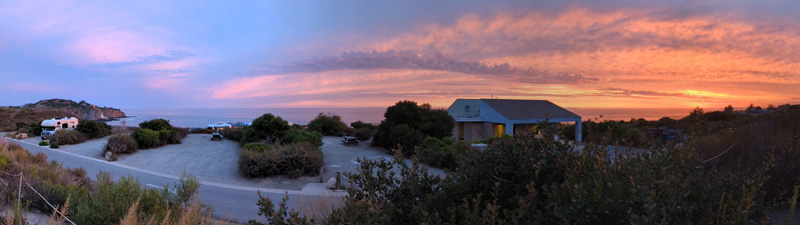
Like national parks, state park campgrounds are popular because they are located in areas worth preserving. California state parks, in particular, are especially attractive because they have many more coastal campgrounds than national parks.
Here’s a map showing the locations of California state park campgrounds.
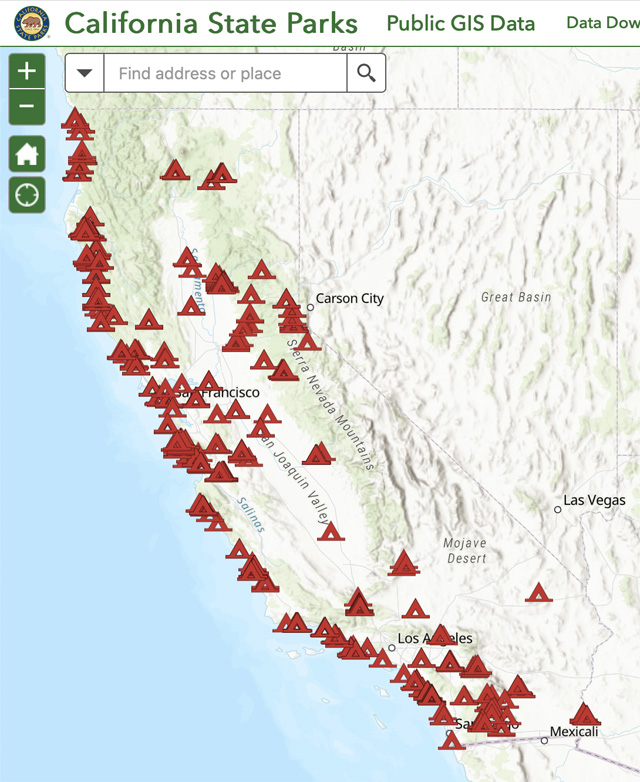
See how many campgrounds line the coast? The advantages of coastal camping include:
- Great for Kids: Perfect for combining camping with swimming and sand play.
- Most state parks have token-operated hot showers.
- Mild Weather: smaller temperature swings, making days cooler and nights warmer.
- This reduces the amount of cold-weather gear you need, making them ideal for beginner campers. For more details, see the Camping Gear page.
⚠️ A Word of Warning: Many coastal camps between LA and San Diego are right next to active train tracks. Check the map carefully before choosing a site.
Reservation Schedule
Reservations are made through reservecalifornia.com. Unlike national parks, the reservation rules aren’t neatly summarized. To be precise, you’d need to check each park’s website, but every campground I’ve booked so far has opened reservations 6 months in advance.
A Handy Trick
The same trick described in the National Parks section—booking earlier based on the checkout date and later modifying the check-in date—also works for state parks. Since the maximum stay per check-in is 7 nights, keep this in mind when planning.
TIP: During reservations, you’ll be asked how many vehicles you’re bringing and to enter license plate numbers. I’ve always indicated that I wasn’t bringing a car and left the license plate blank, and I’ve never had any issues.
3. Local Parks
If you just want a quick getaway on a Friday night to grill meat and sit by the fire with friends, there’s no real need to travel far to a scenic campground.
For example, Orange County, where I live, operates several campgrounds. Reservations can be made at
https://www.ocparks.com/reservations-permits/make-reservation
They’re inexpensive, and there are no cancellation fees. Because they’re so affordable, I sometimes stop by just to pay for parking, enjoy a campfire, and head home.
Of course, if you want to reserve two or three adjacent sites on a peak-season weekend, you’ll still need to book in advance. But there’s no need to set alarms or obsess over the exact release time.
4. Private Campgrounds
If you want more amenities or “Glamping” options, private sites are the way to go.
KOA (Kampgrounds of America®) operates campgrounds nationwide, and reservations can be made at koa.com. These locations often have swimming pools and various recreational facilities, making them a great option if you want to spend most of your time within the campground.
There are also many smaller, locally operated campgrounds. Some even offer pre-installed yurts, where you can sleep on a proper bed with just a sleeping bag—often referred to as glamping.
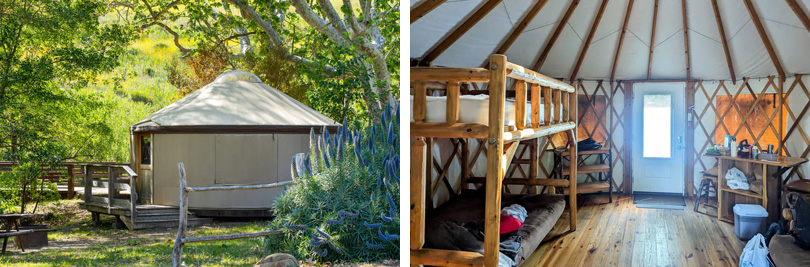
When I visited Bryce Canyon, it was too late to reserve a campsite inside the park, and to save on lodging costs, I stayed at a private campground near the park entrance. Bryce Canyon has the shortest distance from entrance to major attractions among all the national parks I’ve visited, so staying outside the park made it easy to go in and out. With better shower facilities and more dining options, I even wondered whether camping outside the park was actually the better choice.
Private campgrounds offer an extremely wide range of options, making it hard to know what to prioritize. The key point is that because they operate for profit, prices adjust according to supply and demand. Unless a campground is exceptionally popular, there’s usually no need to set alarms and fight for reservations.
💬 If you have any questions or feedback, please leave a comment!
To run this site ad-free, writing a comment requires a GitHub account. Thank you for understanding the extra step! 🙏