Here are the essential items you need for a campsite.
1. Sleeping Pad
When preparing for camping, the first thing that comes to mind is usually a tent, but I recommend choosing the sleeping pad first. The tent shouldn’t be smaller than the bedding you’ll use.
Tip for Beginners
For those who are new to camping, I suggest a way to enjoy camping with minimal preparation. If the nighttime low is above 60°F, the insulation of the sleeping pad is not very important. If you are going to sleep inside a sleeping bag, even a simple indoor mat can be good enough. Low-altitude campsites in California can experience this weather from July to September.
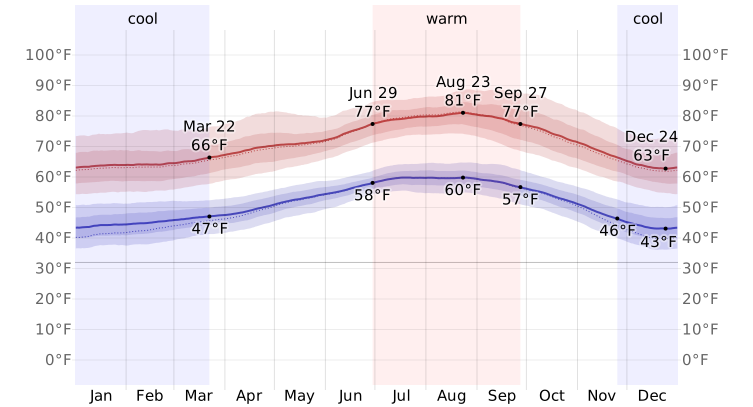
If you’re unsure whether your family will enjoy camping, a good way to start is to simply use the various bedding items you have at home during the warmer seasons. Think of it as an opportunity to wash your bedding, and just bring what you use at home. Just remember to bring thick bedding to account for uneven ground.
Tip for Experienced Campers
If you’ve camped before and think you’ll go multiple times, it’s time to learn about the importance of R-Value. R-Value quantifies insulation and is also used for building materials. A sleeping pad with an R-Value of 4 or higher is suitable for winter use. Our family used sleeping pads with an R-Value of 3.7 and stayed reasonably comfortable even in the mid-40°F range.
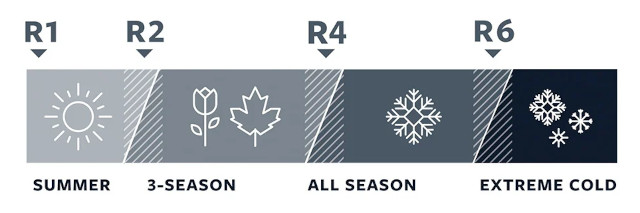
Contrary to appearances, thick sleeping pads or inflatable queen-size mattresses sold on Amazon often lack an R-Value and have no insulation. Your back can get chilly in the early morning.
If you really want to use these when lowest temperature is below 60°F, you can endure colder weather by placing your indoor winter bedding on top of these products and using a sleeping bag.
Getting back to the main point, branded pads (like those sold at REI) with an R-Value of 2 or more have excellent insulation, even if they appear thin.
Important Note
Most pads with proper R-Value come in single-person sizes. If you are looking for a double size because you worry about children rolling off the pad, your options are very limited. Until children are old enough to use single-person pads, one solution is to camp only in warm weather and use large, non-insulated sleeping pads.
2. Tent
First, lay out the sleeping pads you chose and check how much floor space they take up. Choose a tent that matches that size. Generally, a 6-person tent is the appropriate size for placing two queen mattresses side-by-side.
Some of you might be wondering, “Is this a typo? How can 3 people sleep on a queen mattress?” Product boxes or manuals sometimes show a diagram of how people are positioned, like this:
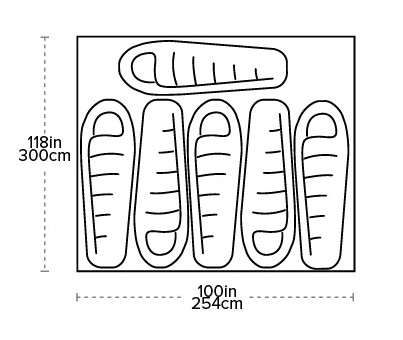
If you simply choose a 4-person tent for a family of four, you might end up making memories of sleeping crisscrossed while smelling each other’s feet, or having to leave all your luggage in the car.
Instant Tents
Instant tents are often a big consideration, especially for first-time campers. I also started with an instant tent. The pros and cons are endless, so here I’ll only list situations where you should avoid them and where you’ll definitely want them.
Avoid an instant tent if you have limited storage space for it. Instant tents take up a considerable amount of space even when folded. Don’t choose one just based on the box size at the store. It’s nearly impossible to fit it back into the original box size after use.
I started with an instant tent, and after several camping trips, I bought a much larger duffel bag. If you don’t camp often, storing that giant bag all year may feel wasteful.
Consider an instant tent if you’re going camping only with your immediate family and there is no one else to help you pitch the tent. If you camp with friends, you’ll have help, so it’s not an issue. But if you later go alone with your family and have to set it up alone, you might struggle without an instant tent.
If you have decided on an instant tent, I recommend the Best Camping Tents page on outdoorgearlab.com. They do a great job comparing price and features. If you don’t plan to camp in the rain, any tent on that list is fine.
Important Note
Some tents on the comparison site I introduced might have other sizes available. If you find a tent you like but the size isn’t right, search to see if other sizes exist.
3. Sleeping Bag
This is a bit tricky. As mentioned in Sleeping Pad above, if the weather isn’t cold (lowest temperature is 60°F or higher), insulation is not that important. If you are new to camping and unsure if you’ll continue, you can bring winter blankets or comforters from home.
However, unlike a sleeping pad, a sleeping bag is useful in various situations besides camping. For example, children often take a sleeping bag when they stay overnight in groups at school or when they have a sleepover at a friend’s house. Therefore, it’s good to have one.
Temperature Rating
When buying a sleeping bag, check the Temperature Rating. I interpret it as “the temperature at which you won’t die,” not necessarily sleep comfortably.
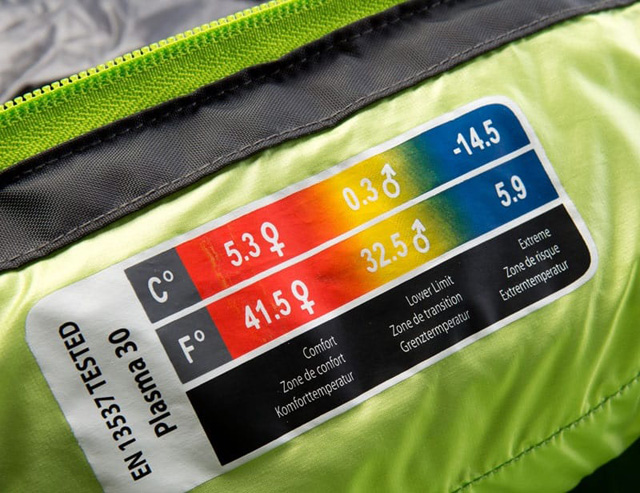
Sleeping bag manufacturers also display this information on their products. For instance, the image above shows the internal tag of a sleeping bag with a Temperature Rating of 30°F bag: 32.5°F is the Lower Limit, and 41.5°F is the Comfort rating. Next to it, there is a distinction by gender (male/female), which might challenge a man’s pride, but I don’t give in and use a sleeping bag even warmer than the female standard.
Some people often play well in cold ocean water or swimming pools. As a kid, my lips turned blue in water like that. I sleep comfortably only when I choose a bag with a Temperature Rating 20 degrees lower than the lowest expected low.
If you are following along, you might be wondering, “So, do I need separate sleeping bags for summer, fall, and even early summer?” If you are backpacking and carrying the sleeping bag in your pack, it might be worth considering. However, for family camping, you can buy a sleeping bag suited for the coldest temperature you’ll take your family out in, and simply zip it open and use it like a blanket during warmer seasons.
- Conclusion: Based on my coldest family-camping experience (around a 45°F low), a Temperature Rating between 20–30°F seems appropriate.
- So, what should I buy?: I recommend the Best Budget Camping Sleeping Bag on outdoorgearlab.com’s Best Sleeping Bags page.
4. Personal Items
The items introduced here are not easy to share for long duration and should be prepared by each person. You can purchase them anywhere, from Walmart to REI, depending on your preferences and situation.
-
Camping Chair: If multiple families are going together and the kids play well with each other, preparing chairs for the number of adults is usually sufficient. Campsites usually have picnic tables you can use as well. If the children are calm and sit still, or if you’re only going as a family, it’s best for everyone to have their own chair.
-
Lantern/Headlamp: Children love to run around and play even after dark, so a headlamp that doesn’t need to be held is very useful. Prepare one per child. Adults can usually get by using a smartphone flashlight for short walks.
-
Portable Toilet: This is useful when campground bathrooms are too dirty. REI’s Camp Toilets page has options where waste mixes with powder inside a bag and turns into a gel. The bags seal in two layers and can be thrown away.
- Note: If you are camping with other families, the sound might be audible.
5. Shared Items
If you are going as a group, these are the supplies you might expect the frequent campers in the group to bring. If you’re going alone, you’ll need to bring them yourself.
-
Grill/Stove: If the campsite has an outdoor grill, you can bring charcoal. Otherwise, it’s good to pack a portable grill or camp stove.
-
Cooler: Essential for keeping food fresh. Bring ice or ice packs for drinks and perishables.
-
Cooking Utensils: You’ll need pans, pots, cooking tools, and dishes. If going as a group, coordinate who will bring what.
-
Trash Bags: The most commonly forgotten item! Trash cans are usually far away, so you’ll need bags for immediate waste.
💬 If you have any questions or feedback, please leave a comment!
To run this site ad-free, writing a comment requires a GitHub account. Thank you for understanding the extra step! 🙏